


 Email
Email Chat
ChatAt Bottaro Injury Lawyers, we have helped many in our Rhode Island and Massachusetts communities with legal representation after a devastating motorcycle crash. Our experienced bike accident lawyers know how important it is to investigate these cases right after they occur. This is why we offer a 24/7 free case review by calling or texting our famous (401) 777-7777 number. In today’s blog, we explain how bike accident personal injury cases are different from car accident cases (which of course, we also handle). Motor vehicle accidents are an unfortunate reality on our roads, capable of inflicting severe physical, emotional, and financial hardship. While any collision can be devastating, there’s a common misconception that all accident claims are handled similarly. This couldn’t be further from the truth, especially when comparing motorcycle accidents to car accidents.
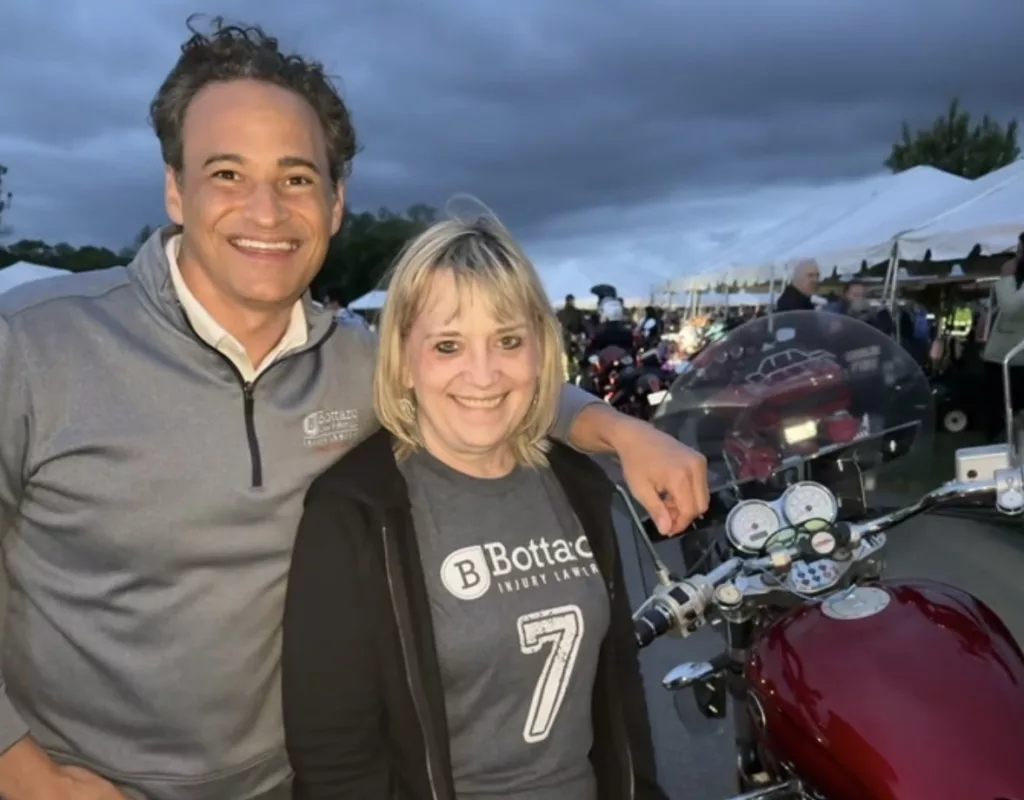
ATTORNEY MIKE BOTTARO AND BETH PROUDLY SUPPORTING THE SPECIAL OLYMPICS OF RHODE ISLAND BIKE RUN
At Bottaro Injury Lawyers, we have decades of combined legal experience representing victims of all types of motor vehicle collisions across Rhode Island and Massachusetts. We understand that while the fundamental goal in both scenarios is to secure fair compensation for injuries and losses, the path to achieving that justice in a motorcycle accident claim is often distinctly different and significantly more complex than in a car accident.
If you’ve been involved in an accident, whether on two wheels or four, understanding these critical differences can profoundly impact your ability to recover. Let’s delve into what sets motorcycle and car accident injury claims apart.
The Raw Reality: Disparity in Impact and Injuries
One of the most stark and undeniable differences between a motorcycle and car accident lies in the sheer disparity of physical impact and the severity of injuries sustained.
The Extreme Vulnerability of Motorcyclists
Motorcyclists, by the very nature of their vehicle, are almost entirely exposed. There’s no steel cage, no crumple zones, no airbags, and no seatbelts to absorb the force of impact. A collision that might result in minor damage and whiplash for a car occupant can be catastrophic, if not fatal, for a motorcyclist.
Common severe injuries in motorcycle accidents include:
- Road Rash: Often much more than just a scrape, severe road rash can strip away layers of skin, muscle, and even bone, leading to permanent disfigurement, chronic pain, and a high risk of infection.
- Fractures: Broken bones, especially in the limbs, pelvis, and spine, are incredibly common. These can require extensive surgeries, pins, plates, and lengthy rehabilitation.
- Head and Traumatic Brain Injuries (TBIs): Despite helmet use, the violent forces in a motorcycle crash can cause concussions, contusions, and diffuse axonal injuries, leading to lifelong cognitive, emotional, and physical impairments.
- Spinal Cord Injuries: These devastating injuries can result in paralysis, often impacting a motorcyclist’s ability to walk, work, and live independently.
- Internal Injuries: Damage to organs like the lungs, liver, and spleen, often unseen immediately, can be life-threatening.
- Amputations: In severe cases, limbs can be so crushed or mangled that amputation becomes necessary.
According to the National Highway Traffic Safety Administration (NHTSA), motorcyclists are significantly overrepresented in fatal crashes compared to other vehicle types. While Rhode Island has made strides in motorcycle safety, the inherent vulnerability of riders means that when accidents do occur, the consequences are often far more severe. This higher likelihood of catastrophic injury means that motorcycle accident claims almost universally involve higher medical bills, longer recovery times, and a greater need for long-term care and compensation for pain and suffering.
Car Occupant Injuries: Serious, but Often Less Catastrophic
While car accidents certainly lead to serious and life-altering injuries—including whiplash, broken bones, concussions, and even fatalities—the protective shell of a vehicle generally provides a significant buffer. The structural integrity, airbags, and seatbelts work to absorb impact forces and keep occupants contained. This isn’t to diminish the suffering of car accident victims, but rather to highlight why the injury claims often take different trajectories. The long-term medical needs and associated costs can often be substantially different, impacting the overall value and complexity of the claim.
Liability and Fault: A Different Road to Justice
Proving fault is a critical component of any personal injury claim. However, in motorcycle accidents, determining liability often faces unique hurdles.
The Pervasive “Blame the Biker” Bias
Unfortunately, motorcyclists often face an unfair societal bias. Many people, including some law enforcement officers, jurors, and even insurance adjusters, subconsciously (or consciously) view motorcyclists as reckless thrill-seekers. This prejudice can manifest in:
- Police Reports: Initial police reports might subtly or overtly place fault on the motorcyclist, even when evidence suggests otherwise.
- Witness Statements: Witnesses who harbor this bias might interpret events differently, swaying their perception of who was at fault.
- Jury Perception: In a trial, convincing a jury that the motorcyclist was not at fault can be an uphill battle against preconceived notions.
This bias means that proving liability in a motorcycle accident often requires far more rigorous investigation and evidence collection than in a typical car accident.
Complexities of Motorcycle Accident Investigations
For these reasons, a thorough investigation is paramount in motorcycle accident cases. This might involve:
- Accident Reconstruction: Hiring experts to recreate the accident scene using physics, vehicle damage analysis, and roadway evidence.
- Expert Testimony: Bringing in engineers, medical specialists, and vocational experts to explain the nuances of the accident and the extent of injuries.
- Eyewitness Corroboration: Diligently seeking out and securing statements from every possible witness, regardless of initial perception.
- Traffic Camera Footage: Obtaining and analyzing any available surveillance footage from nearby businesses or traffic cameras.
Rhode Island operates under a pure comparative negligence system, meaning that even if you are found partially at fault for an accident, you can still recover damages, but your award will be reduced by your percentage of fault. This makes overcoming bias and meticulously proving the other party’s negligence even more crucial in motorcycle accident claims. In contrast, determining fault in car-on-car collisions, while still requiring investigation, often relies more heavily on standard traffic laws, clear right-of-way rules, and more easily ascertainable evidence.
Insurance Dynamics: More Than Just a Policy
Navigating insurance after an accident is always a challenge, but motorcycle insurance often presents its own set of complications.
Motorcycle Insurance Nuances
While auto insurance policies are fairly standardized, motorcycle insurance can vary significantly. Some policies may have lower coverage limits for bodily injury and property damage, reflecting perceived higher risk. More importantly, understanding what coverage applies to medical expenses can be critical.
- Rhode Island is a “Fault” State: Unlike “no-fault” states, where your own insurance generally pays for your initial medical bills regardless of fault (like Massachusetts’ PIP), in Rhode Island, the at-fault driver’s insurance is responsible for your damages.
- Medical Payments (MedPay): While not mandatory, MedPay coverage is crucial for motorcyclists in Rhode Island. It covers medical expenses for you and your passengers regardless of fault, providing immediate financial relief before fault is definitively established. For car accidents in Rhode Island, MedPay is also available and advisable.
- Personal Injury Protection (PIP) in Massachusetts: If the accident occurred in Massachusetts, the laws are different. Massachusetts is a “no-fault” state, and PIP coverage (Personal Injury Protection) is mandatory for car insurance. However, PIP typically does not apply to motorcycle accidents in Massachusetts, meaning motorcyclists often must rely on their health insurance or MedPay. This is a crucial distinction that can significantly impact how medical bills are paid after a crash.
The Critical Role of Underinsured/Uninsured Motorist Coverage
For both motorcyclists and car occupants, Underinsured/Uninsured Motorist (UIM/UM) coverage is vital, but arguably even more so for motorcyclists. Given the potential for catastrophic injuries, the at-fault driver’s policy limits may be quickly exhausted. UIM/UM acts as a safety net, allowing you to recover additional damages from your own insurance policy if the at-fault driver doesn’t have enough coverage or any coverage at all. Without it, a severely injured motorcyclist could be left with massive medical debt and no way to recover for their suffering.
Insurance companies, always seeking to minimize payouts, may also employ tactics to devalue motorcycle claims, arguing about pre-existing conditions or the inherent “risk” of riding. An experienced personal injury attorney is essential to counter these strategies.
Types of Damages: Beyond Medical Bills
While both types of accidents involve claims for medical expenses, lost wages, and pain and suffering, the magnitude and types of damages sought often differ significantly.
Catastrophic Injury Focus
Due to the higher likelihood of severe and catastrophic injuries, motorcycle accident claims frequently involve:
- Extensive Future Medical Care: This can include long-term rehabilitation, assistive devices, home modifications, and ongoing specialist appointments for the rest of the victim’s life.
- Loss of Earning Capacity: If a motorcyclist sustains a permanent injury that prevents them from returning to their previous occupation or any meaningful work, the claim will seek compensation for their entire projected lost earnings over their lifetime.
- Higher Pain and Suffering: The sheer intensity of pain, disfigurement, and emotional trauma associated with severe motorcycle injuries often warrants substantially higher compensation for pain and suffering.
Loss of Enjoyment of Life
For many motorcyclists, riding is not just transportation; it’s a passion, a lifestyle, a source of freedom and joy. When an accident permanently prevents them from riding or significantly impairs their ability to pursue hobbies and activities they once loved, this “loss of enjoyment of life” becomes a substantial and justifiable component of their damages. While this applies to car accident victims as well, it often holds particular weight in motorcycle cases due to the deep connection many riders have with their activity.
The Legal Process: Why an Experienced RI and MA Bike Accident Attorney Matters
Navigating any personal injury claim is complex, but the unique challenges of motorcycle accident claims necessitate a specialized approach.
Early Intervention is Key
For motorcyclists, contacting an attorney immediately after an accident is even more critical than for car occupants. The “blame the biker” bias means that evidence can be misinterpreted or even disappear quickly. An attorney can swiftly:
- Preserve Evidence: Secure police reports, witness statements, and accident scene photos before they are lost or altered.
- Investigate Thoroughly: Deploy accident reconstructionist and other experts to establish fault scientifically.
- Counter Bias: Present a strong, evidence-based case to law enforcement, insurance companies, and if necessary, a jury.
While valuable for car accident victims, this proactive and specialized evidence collection is paramount for motorcyclists to ensure their side of the story is told accurately and forcefully.
Negotiating with Insurers and Litigation
Insurance companies are notorious for lowballing settlement offers, especially in motorcycle cases where they might try to exploit the aforementioned biases or perceived “risk.” An experienced personal injury attorney understands the true value of your claim, the long-term costs of your injuries, and how to effectively negotiate with insurers to secure maximum compensation. If a fair settlement cannot be reached, the attorney will be prepared to take your case to court, advocating fiercely on your behalf.
Don’t Face the Road Alone
Both motorcycle and car accidents can have life-altering consequences. However, the distinct vulnerabilities of motorcyclists, the pervasive societal biases they face, and the unique insurance and legal complexities of their claims demand a specialized legal approach.
At Bottaro Law Group, we don’t just handle accident claims; we understand the nuances of motorcycle collisions and the profound impact they have on riders and their families. We are dedicated to fighting for the rights of injured motorcyclists and car occupants across Rhode Island and Massachusetts, ensuring that their voices are heard and they receive the full and fair compensation they deserve.
If you or a loved one has been involved in a motorcycle or car accident, don’t hesitate to seek knowledgeable legal guidance. Contact Bottaro Law Group today for a free, no-obligation consultation. Let us put our experience to work for you, so you can focus on your recovery.
It’s Good to Know Mike Bottaro – 24/7 Top-Rated Personal Injury Help
At Bottaro Injury Lawyers, we care for people. Attorney Mike Bottaro and his award-winning legal team handle all types of personal injury cases throughout Rhode Island and Massachusetts. We can even help on cases in other states as well. We pride ourselves on our honesty, integrity, and results. Contact us 24/7 in any method you prefer for a fast, free, and confidential consultation about your case. Text or call us at 401-777-7777 or fill out our free and confidential online form. We are here to serve and help you!